What Are Project Management Tools and How Do They Work?
What Are Project Management Tools and How Do They Work?
In today’s fast-paced digital economy, delivering projects on time, within budget, and at high quality has become a critical challenge for businesses of all sizes. This is where project management tools play a vital role. From startups and remote teams to global enterprises in Tier-1 countries like the United States, United Kingdom, Canada, and Australia, project management software has become an essential productivity driver.
This in-depth guide explains what project management tools are, how they work, and why modern businesses rely on them. Whether you manage software development, marketing campaigns, construction projects, or enterprise operations, understanding these tools can dramatically improve efficiency, collaboration, and outcomes.
What Are Project Management Tools?
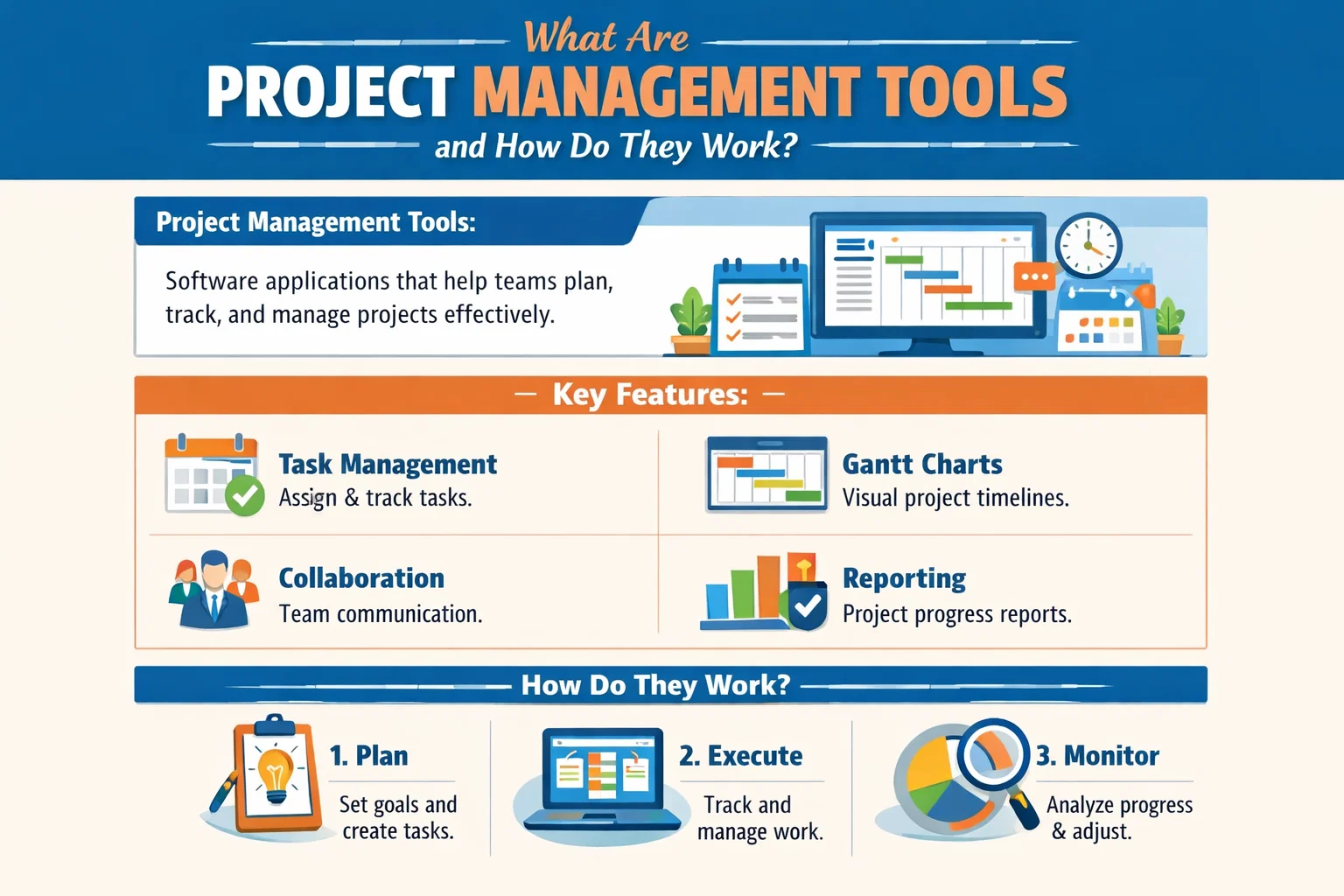
Project management tools are software applications designed to help individuals and teams plan, execute, monitor, and complete projects efficiently. They provide a structured framework for managing tasks, timelines, resources, budgets, and communication in one centralized system.
Instead of relying on emails, spreadsheets, or manual tracking, project management tools offer real-time visibility into project progress, responsibilities, and risks.
Why Project Management Tools Are Essential Today
Modern projects are more complex than ever. Teams are often distributed across locations, time zones, and departments. Without proper tools, projects can quickly fall into chaos.
Project management tools help businesses:
- Improve collaboration and transparency
- Reduce delays and cost overruns
- Track progress in real time
- Align teams with business goals
- Increase accountability
In Tier-1 markets, where productivity and efficiency directly impact profitability, these tools are considered mission-critical.
How Do Project Management Tools Work?
At their core, project management tools work by breaking down large projects into manageable components. They provide a digital workspace where teams can plan, assign, track, and collaborate throughout the project lifecycle.
Most project management tools follow these core steps:
- Project planning and setup
- Task creation and assignment
- Timeline and milestone tracking
- Collaboration and communication
- Monitoring, reporting, and optimization
Key Features of Project Management Tools
While features vary across platforms, most modern project management tools include the following core capabilities:
1. Task and Workflow Management
Tasks are the building blocks of any project. Project management tools allow teams to create tasks, assign owners, set deadlines, and define priorities.
Advanced tools support workflows, dependencies, and automation to ensure tasks move smoothly from start to completion.
2. Project Planning and Scheduling
Planning tools help teams define project scope, milestones, and timelines. Visual planning tools such as Gantt charts and calendars make it easy to see how tasks align over time.
| Planning Feature | Purpose |
|---|---|
| Gantt Charts | Visualize timelines and dependencies |
| Milestones | Track major project phases |
| Calendars | Manage deadlines and schedules |
3. Collaboration and Communication
One of the biggest advantages of project management tools is improved collaboration. Teams can comment on tasks, share files, tag colleagues, and keep all project-related communication in one place.
This reduces email overload and ensures everyone stays aligned.
4. Resource Management
Resource management features help managers allocate people, time, and budgets effectively. By tracking workloads, businesses can avoid burnout, optimize capacity, and improve productivity.
5. Progress Tracking and Reporting
Real-time dashboards and reports provide instant visibility into project health. Managers can track completion rates, identify bottlenecks, and make data-driven decisions.
This level of transparency is especially important for enterprise and agency environments.
Types of Project Management Tools
Project management tools come in different types, depending on methodology and business needs.
Traditional Project Management Tools
These tools focus on structured planning and linear workflows, often used in construction, manufacturing, and large-scale enterprise projects.
Agile and Scrum Tools
Agile tools support iterative development, sprints, and continuous improvement. They are widely used in software development and product teams.
Kanban-Based Tools
Kanban tools emphasize visual task boards that help teams manage work-in-progress efficiently.
Benefits of Using Project Management Tools
Organizations that adopt project management tools experience significant benefits:
- Higher productivity and efficiency
- Better time and cost control
- Improved team accountability
- Enhanced collaboration
- Higher project success rates
These benefits directly contribute to better ROI, especially in competitive Tier-1 markets.
Project Management Tools for Remote and Hybrid Teams
With the rise of remote and hybrid work, project management tools have become even more critical. They act as a central hub that keeps distributed teams connected and aligned.
Features like real-time updates, cloud access, and integrations with communication tools make remote project execution seamless.
Enterprise Project Management in Tier-1 Countries
In Tier-1 economies, enterprises rely on advanced project management tools to manage complex portfolios, comply with regulations, and scale operations.
Enterprise-grade tools offer:
- Advanced security and compliance
- Custom workflows
- Integration with ERP and CRM systems
- Advanced analytics and reporting
How Project Management Tools Improve Business Outcomes
Beyond task tracking, project management tools drive strategic value by aligning projects with business goals. Leaders gain visibility into performance, risks, and resource utilization.
This enables proactive decision-making, faster execution, and continuous improvement.
Future Trends in Project Management Tools
The future of project management tools is shaped by automation, artificial intelligence, and predictive analytics. Modern platforms are increasingly capable of:
- Predicting project risks
- Automating routine tasks
- Providing intelligent recommendations
- Enhancing decision-making
These innovations will further strengthen how teams plan and deliver projects.
Final Thoughts
Project management tools are no longer optional—they are essential for modern businesses. By providing structure, visibility, and collaboration, these tools help teams deliver projects more efficiently and consistently.
Whether you are a small team or a global enterprise operating in Tier-1 markets, investing in the right project management tool can significantly improve productivity, profitability, and long-term success.
Comments (3)