Benefits of CRM Software for Small and Large Businesses
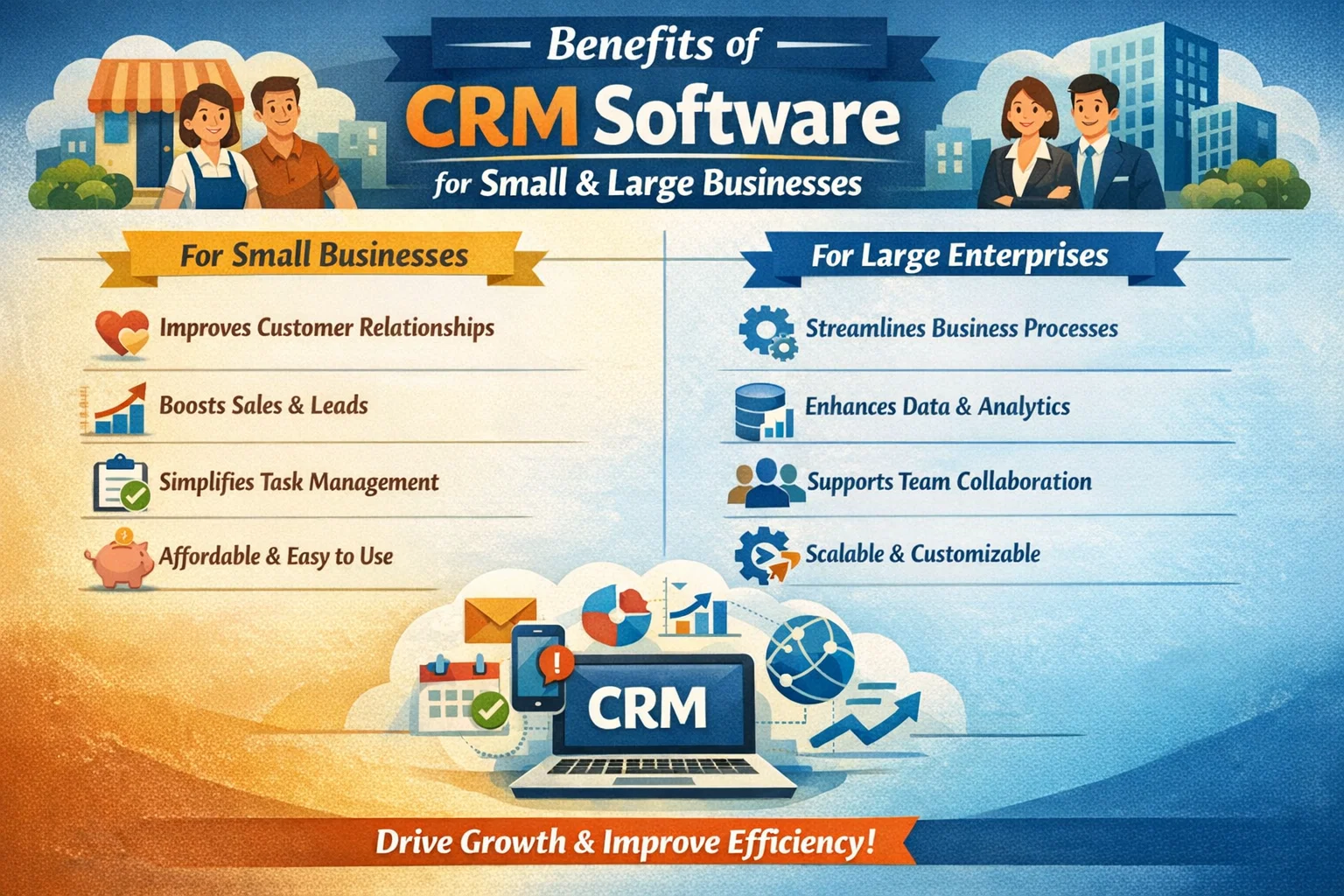
Benefits of CRM Software for Small and Large Businesses
In a highly competitive global marketplace, businesses must focus on building strong, long-lasting customer relationships to survive and grow. This is why CRM software has become one of the most valuable digital tools for companies across Tier-1 countries such as the United States, United Kingdom, Canada, Australia, and Europe.
Whether you are a startup, a small business, or a multinational enterprise, CRM software helps you organize customer data, improve communication, increase sales, and deliver exceptional customer experiences. In this in-depth guide, we explore the key benefits of CRM software and how it creates measurable value for both small and large businesses.
What Is CRM Software?
CRM (Customer Relationship Management) software is a centralized platform that stores, manages, and analyzes customer interactions across sales, marketing, and support channels. It provides a single source of truth for customer data, enabling teams to work smarter and faster.
Why CRM Software Matters in 2026 and Beyond
Customer expectations are higher than ever. People want personalized communication, instant responses, and consistent experiences across all touchpoints. CRM software enables businesses to meet these expectations while scaling efficiently.
Core Benefits of CRM Software
1. Centralized Customer Data
CRM software stores all customer information—contact details, communication history, purchases, preferences, and support tickets—in one secure location. This eliminates data silos and ensures every team has access to accurate, up-to-date information.
2. Improved Sales Performance
One of the biggest benefits of CRM software is its ability to boost sales efficiency. Sales teams can track leads, manage pipelines, automate follow-ups, and identify high-value prospects more easily.
- Shorter sales cycles
- Higher conversion rates
- Better deal forecasting
3. Better Customer Experience
CRM software allows businesses to deliver personalized experiences by understanding customer behavior and preferences. This leads to higher customer satisfaction and long-term loyalty.
4. Increased Customer Retention
Retaining existing customers is significantly cheaper than acquiring new ones. CRM systems help businesses stay connected with customers through timely follow-ups, reminders, and personalized offers.
5. Marketing Automation and ROI Growth
CRM software integrates marketing automation tools that help businesses segment audiences, run targeted campaigns, and track performance in real time.
This results in higher return on investment (ROI), especially in high-CPC markets such as insurance, finance, SaaS, and enterprise technology.
Benefits of CRM Software for Small Businesses
Small businesses often operate with limited resources. CRM software helps them compete with larger companies by improving efficiency and organization.
1. Cost-Effective Growth
Cloud-based CRM platforms offer affordable pricing plans, making them accessible for startups and small teams.
2. Lead Management Made Simple
Small businesses can capture leads from websites, ads, and emails and manage them from a single dashboard.
3. Improved Productivity
Automation reduces manual work such as data entry, follow-ups, and reporting, allowing teams to focus on revenue-generating activities.
4. Professional Customer Communication
CRM software ensures consistent communication, helping small businesses appear more professional and trustworthy.
Benefits of CRM Software for Large Enterprises
Large organizations deal with massive volumes of customer data and complex workflows. CRM software provides scalability and advanced analytics required at the enterprise level.
1. Advanced Analytics and Insights
Enterprise CRM platforms offer deep analytics, AI-powered forecasting, and real-time dashboards that support strategic decision-making.
2. Cross-Department Collaboration
CRM systems break down silos between sales, marketing, customer support, and management teams.
3. Global Scalability
Enterprise CRM software supports multiple regions, currencies, languages, and compliance requirements.
4. Enhanced Data Security
Leading CRM platforms comply with global data protection regulations such as GDPR and offer enterprise-grade security.
CRM Software and Revenue Growth
Businesses using CRM software consistently report higher revenue growth due to better lead nurturing, upselling, and cross-selling opportunities.
CRM Software Use Cases Across Industries
| Industry | CRM Use Case |
|---|---|
| Technology & SaaS | Subscription management and customer lifecycle tracking |
| Finance & Insurance | Lead scoring, policy management, and compliance tracking |
| E-commerce | Customer segmentation and personalized marketing |
| Healthcare | Patient engagement and appointment management |
High-Value CRM Benefits for Tier-1 Markets
In Tier-1 countries, CRM software delivers especially high value due to:
- High customer acquisition costs
- Strong focus on customer experience
- Data-driven business cultures
- Competitive digital advertising markets
Common CRM Implementation Mistakes
- Poor onboarding and training
- Over-customization
- Low user adoption
- Ignoring data quality
Future Benefits of CRM Software
The future of CRM includes AI-driven personalization, predictive analytics, conversational CRM, and deeper automation. Businesses adopting modern CRM platforms early gain a significant competitive edge.
Final Thoughts: Is CRM Software Worth It?
The benefits of CRM software far outweigh the investment. From increasing sales and improving customer retention to enabling data-driven growth, CRM systems are essential for businesses of all sizes.
Whether you run a small business or a large enterprise, CRM software empowers you to build stronger relationships, scale efficiently, and stay competitive in high-value global markets.
Comments (3)