Key Features to Look for in a CRM System
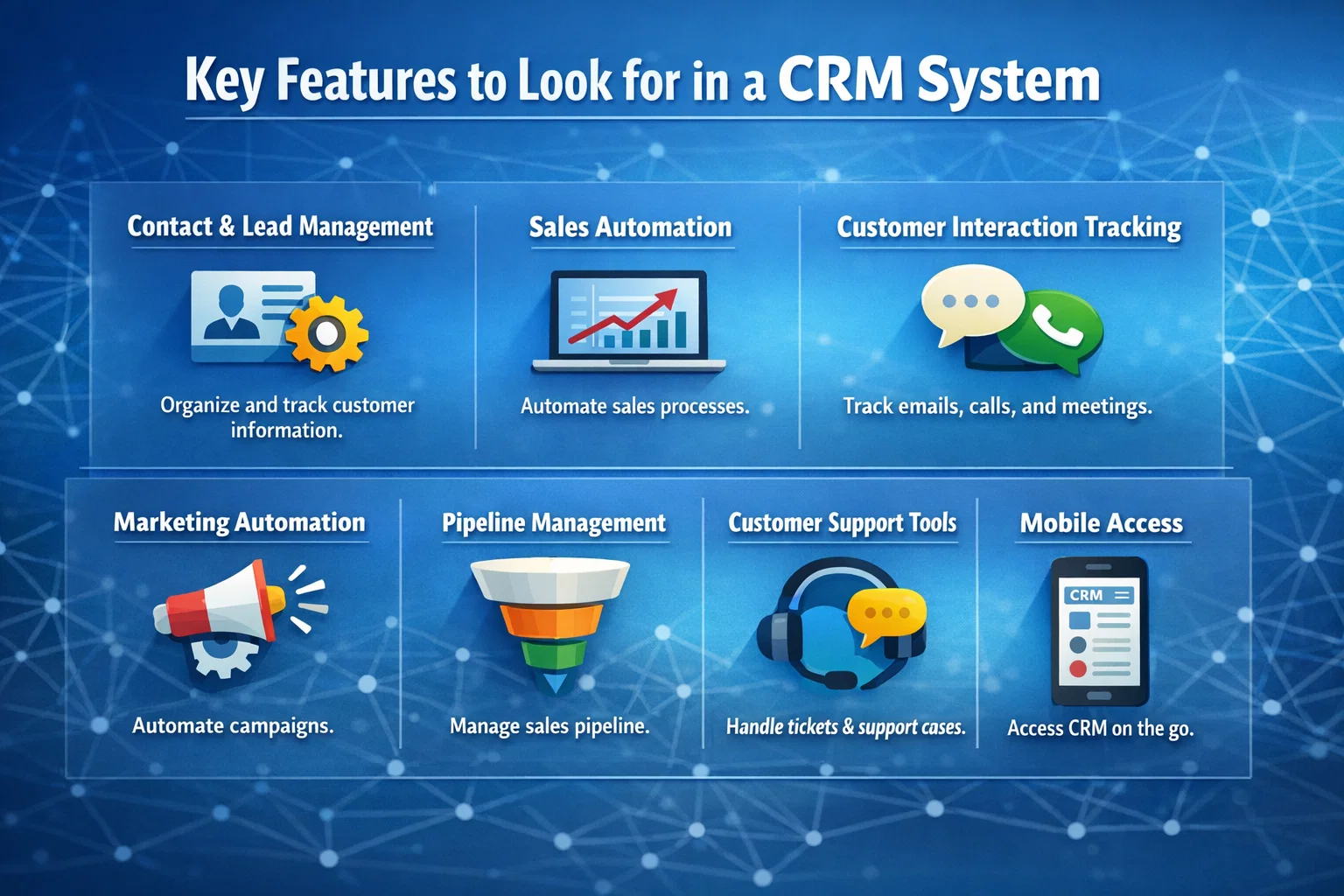
Key Features to Look for in a CRM System
Choosing the right CRM system is one of the most important technology decisions a business can make. A modern Customer Relationship Management (CRM) platform does far more than store contacts—it becomes the central nervous system of sales, marketing, customer support, and revenue intelligence. With competition increasing across industries, businesses that leverage the right CRM software gain a measurable advantage in customer acquisition, retention, and lifetime value.
This guide explores the essential CRM system features every business should evaluate before investing in CRM software. Whether you are a startup, SMB, or enterprise, understanding these features will help you choose a future-proof CRM solution that drives growth and delivers a high return on investment.
What Is a CRM System?
A CRM system is software designed to manage interactions with customers, prospects, and leads across the entire customer lifecycle. From the first website visit to post-sale support, CRM platforms help businesses centralize customer data, automate workflows, and improve decision-making.
Modern CRM solutions integrate with email, phone systems, marketing platforms, accounting tools, and AI analytics engines. This makes them critical infrastructure for businesses operating in high-value markets such as SaaS, finance, insurance, real estate, healthcare, and e-commerce.
Why CRM Features Matter for Business Growth
Not all CRM systems are created equal. Selecting a platform without the right features can result in poor adoption, wasted budget, and missed revenue opportunities. Businesses in Tier-1 markets often pay premium pricing for CRM software, making feature evaluation even more critical.
The best CRM platforms help businesses:
- Increase sales conversion rates
- Improve customer retention
- Automate repetitive processes
- Gain data-driven insights
- Enhance customer experience
Core Features Every CRM System Must Have
1. Contact & Lead Management
At the heart of any CRM system is contact and lead management. This feature allows businesses to store, organize, and track detailed information about customers and prospects in one centralized database.
Advanced CRM platforms support:
- Custom contact fields
- Lead source tracking
- Customer interaction history
- Automated lead scoring
- Duplicate detection and data cleaning
Effective lead management ensures sales teams focus on high-value prospects, improving close rates and revenue per customer.
2. Sales Pipeline & Deal Tracking
A visual sales pipeline is essential for forecasting revenue and managing deals efficiently. CRM systems with robust pipeline management allow businesses to customize sales stages based on their unique sales process.
Key pipeline features include:
- Drag-and-drop deal stages
- Automated deal progression
- Revenue forecasting
- Sales activity tracking
- Performance analytics
Sales pipeline visibility is especially valuable for B2B companies, SaaS providers, and enterprise sales teams operating in high-value markets.
3. Marketing Automation Capabilities
Modern CRM systems go beyond sales and include marketing automation. This feature enables businesses to run personalized, data-driven campaigns across email, SMS, and digital channels.
CRM marketing automation typically includes:
- Email campaign management
- Lead nurturing workflows
- Segmentation and targeting
- Behavior-based triggers
- Campaign performance analytics
High-performing marketing automation increases customer engagement while reducing acquisition costs.
4. Customer Support & Ticket Management
Customer experience plays a direct role in brand loyalty and lifetime value. CRM systems with built-in customer support tools help businesses manage inquiries efficiently.
Important support features include:
- Ticket creation and assignment
- SLA management
- Omnichannel support (email, chat, phone)
- Knowledge base integration
- Customer satisfaction tracking
Businesses in competitive markets benefit significantly from faster response times and consistent service quality.
5. Workflow Automation
Automation is one of the most valuable CRM features for scaling operations. CRM workflow automation reduces manual tasks and ensures consistent execution across teams.
Examples of CRM automation include:
- Automated follow-up emails
- Task creation based on triggers
- Deal stage automation
- Approval workflows
- Customer onboarding sequences
Automation not only saves time but also minimizes human error and improves productivity.
6. Reporting & Analytics
Data-driven decision-making is essential for growth. A powerful CRM system offers advanced reporting and analytics capabilities.
High-quality CRM analytics provide insights into:
- Sales performance
- Marketing ROI
- Customer behavior
- Conversion rates
- Revenue forecasting
| Metric | Business Impact |
|---|---|
| Lead Conversion Rate | Measures sales efficiency |
| Customer Lifetime Value | Predicts long-term revenue |
| Sales Cycle Length | Improves forecasting accuracy |
| Churn Rate | Identifies retention issues |
7. Integration Capabilities
A CRM system should integrate seamlessly with existing business tools. CRM integrations enable data flow between platforms, reducing silos and improving efficiency.
Common CRM integrations include:
- Email platforms (Gmail, Outlook)
- Marketing tools
- Accounting software
- Customer support platforms
- Payment gateways
Businesses targeting enterprise customers often require extensive API support and third-party integrations.
8. AI & Predictive Intelligence
AI-powered CRM systems are rapidly becoming the standard in Tier-1 markets. Artificial intelligence enhances decision-making and personalization.
AI CRM features include:
- Predictive lead scoring
- Sales forecasting
- Customer sentiment analysis
- Automated recommendations
- Chatbots and virtual assistants
AI-driven CRM platforms deliver higher efficiency and improved revenue outcomes.
9. Mobile CRM Access
Remote work and mobile sales teams require CRM systems with strong mobile functionality. A mobile CRM app ensures teams can access customer data anytime, anywhere.
Mobile CRM features include:
- Real-time notifications
- Offline access
- Mobile dashboards
- Call and email tracking
10. Security & Compliance
Data protection is critical, especially for businesses operating in regulated markets. A secure CRM system must support:
- Role-based access control
- Data encryption
- Audit logs
- GDPR and compliance support
- Regular security updates
Security features are especially important for finance, healthcare, and enterprise SaaS companies.
How to Choose the Right CRM System
When selecting CRM software, consider your business size, industry, budget, and growth plans. A scalable CRM system should support your business today while adapting to future needs.
Key evaluation factors include:
- Ease of use
- Customization options
- Pricing structure
- Customer support quality
- Long-term scalability
Final Thoughts
The right CRM system can transform how your business operates, sells, and serves customers. By focusing on the core CRM features outlined in this guide, businesses can make informed decisions and invest in software that delivers long-term value.
As competition intensifies in Tier-1 markets, CRM platforms that combine automation, analytics, AI, and security will continue to command premium pricing and deliver higher ROI.
Choosing the right CRM system is not just a software decision—it is a strategic investment in your business growth.
Comments (3)